No Sunglasses

Alternate blog for There Are No Sunglasses: therearenosunglasses.wordpress.com

Thursday, March 19, 2026

Stop Trump Before He Finishes His Lifetime Vendetta Against the People of Iran

Trump is busy painting a vivid picture off unleashing even greater destruction upon Iran for its stubborn refusal to assume a supine position at Trump and Netanyahu's feet, despite the fact that both sides in this war have already felt compelled to target the other's oil storage and processing facilities.  At the end of this unsolvable dilemma, the Middle East will be unable to market its oil, lp-gas and petroleum bi-products for at least a year, leaving the good ol' USA as the world's only acceptable fuel source, other than Russia and Brazil gas (Brazil is no doubt on Trump's target list).  Our fracked gas and oil production would be dwarfed by the monumental task of supplying the demands of the entire world.

ANNUAL GLOBAL OIL DEMAND---37,434,218,625 BILLION BARRELS world usage
ANNUAL US FIELD PRODUCTION OF CRUDE---4,987,725 MILLION BARRELLS/YEAR-2025

Israel has once again bombed Iranian oil storage facilities and Trump pretends his hands are clean.  Except that AXIOS NEWS had already reported the truth.

"Israeli and U.S. officials said the strike on the gas facility was coordinated between the Israeli prime minister's office and the White House."--- Israel strikes Iran natural gas facility in coordination with U.S.

"Israel, out of anger for what has taken place in the Middle East, has violently lashed out at a major facility known as South Pars Gas Field in Iran," Trump posted on X ​on Wednesday.

Iran then retaliated in yet another tit for tat attack upon Qatar and Riyadh facilities, even after Trump warned against such Iranian retaliation, even after the "rogue" IDF attack...

"In which instance the United States of America, with or without the help or consent of Israel, will massively blow up the entirety of the South Pars Gas Field at an amount of strength and power that Iran has never seen or witnessed before."

The indiscriminate bombing of oil storage facilities would dump millions of gallons of the sticky black goo directly into the pristine waters of the Persian Gulf, then into the Arabian sea and onward into the world's oceans.  Perhaps even more disaster will come through the thick choking clouds of oil smoke certain to rise from the burning, smoking conflagration...remember the burning oil wells gifted us by Saddam Hussein?

46 Oil well fires Images: PICRYL - Public Domain Media Search Engine Public Domain Searchsource

If Trump is allowed to follow through with his promised devastation of Iran's South Pars oil/gas operation, then the complementary destruction of Qatar's own "North Dome" Pars field and processing units will surely follow, with the other Gulf oil majors to receive the same.  How could America's most demented leadership  consider such a dire outcome to be acceptable?

It is fortunate that the following video from 1987 has been reintroduced to the public eye at this time, showing Trump confessing his plans for a war on Iran that are nearly identical to the current mess which Trump has forced upon the world.

Shocking video shows Donald Trump discussing his Iran war plans in 1987

https://www.dailymail.co.uk/embed/video/3620489.html

The same Daily Mail article reveals that Trump had spent thousands of dollars on newspaper ads criticizing US policies in the Gulf...

r/pics - 1987 full-page ad in the New York Times, Washington Post and Boston Globe
source

The letter in the ad reads like one of Trump's modern speeches, spouting the same B.S. about "Nations taking advantage of us."

The Real Reason For Donald Trump's Anti-Iran Vendetta Losing A Nightclub To Anti-Shah Revolution?

Trump in Tehran in 77 (to the right of Warren Beatty and Jack Nicholson)
source

Trump's media records condemn him with his own words...he has ALWAYS PLANNED to destroy Iran and to seize her enormous assets, he only waited until his favorite rogue little killing machine, which masquerades as a "democratic Nation" matured enough to serve as his "fall guy" for his long-planned attacks.

"Israel, out of anger for what has taken place in the Middle East, has violently lashed out at a major facility known as South Pars Gas Field in Iran. A relatively small section of the whole has been hit. The United States knew nothing about this particular attack..."


Wednesday, March 18, 2026

UAE Royal Rips Trump A New One Over Persian Gulf Fiasco


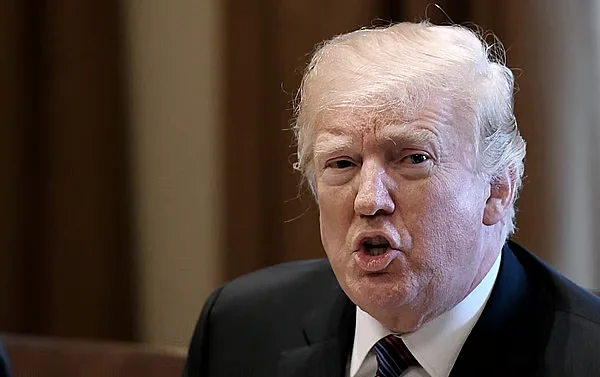
US President Donald Trump speaks in the Cabinet Room of the White House
US President Donald Trump speaks in the Cabinet Room of the White House. Photo: AFP file


Khalaf Al Habtoor, chairman of Al Habtoor Group, says the Gulf and Middle Eastern countries, and their people, are not arenas for settling scores among the great powers


The UAE billionaire Khalaf Al Habtoor on Thursday wrote an open letter to the US President Donald Trump questioning his authority to drag the Gulf and the Middle East into the ongoing military conflict with Iran.

The founder of Al Habtoor Group raised many questions in his open and candid letter, authored in Arabic and shared on the social media platform X, asking Trump whether it was solely his decision to go to war or whether he was influenced by the Israeli Prime Minister Benjamin Netanyahu.
 

In a post on X, the hotel magnate lambasted the president for not considering collateral damage, although he later told The Post: “I blame Trump, but I blame the Iranians more.”


Open Letter from UAE billionaire Khalaf Ahmad Al Habtoor:
Mr President Donald Trump,
 
A direct question: who gave you the authority to drag our region into a war with #Iran? And on what basis did you make such a dangerous decision?
 
Did you calculate the collateral damage before pulling the trigger? Did you consider that the first to suffer from this escalation would be the countries of the region?
 
The peoples of this region also have the right to ask: was this your decision alone? Or was it the result of pressure from #Netanyahu and his government?
 
You have placed the countries of the #Gulf_Cooperation_Council and the Arab states at the centre of a danger they did not choose. Thank God we are strong and capable of defending ourselves, and we have armies and defences that protect our homelands. But the question remains: who allowed you to turn our region into a battlefield?
 
Before the ink had even dried on the #BoardOfPeace initiative that you announced in the name of peace and stability, we now find ourselves facing military escalation that puts the entire region at risk. Where have those initiatives gone? And what has become of the commitments that were presented in the name of peace?
 
Most of the funding proposed in those initiatives came from the countries of the region themselves, particularly Persian Gulf Arab states that contributed billions of dollars on the basis of supporting stability and development. These countries have the right today to ask: where has this money gone? Are we funding peace initiatives, or funding a war that puts us in danger?
 
More dangerously, your decision does not only threaten the peoples of the region. It also reaches the American people, whom you promised peace and prosperity. Today they find themselves in a war financed by their own money and taxes. According to the Institute for Policy Studies (IPS), the cost ranges between $40–65 billion for direct military operations, and could reach $210 billion including economic effects and indirect losses if the conflict continues for four to five weeks. It has even reached the point of sacrificing Americans themselves in a war in which they have no stake.
 
You have also contradicted your promises not to become involved in wars and to focus only on America and place it at the top of your priorities. During your second term you ordered foreign military interventions in seven countries: Somalia, Iraq, Yemen, Nigeria, Syria, Iran, and Venezuela, in addition to naval operations in the Caribbean and the eastern Pacific. In your first year in office you authorised more than 658 external airstrikes, equivalent to the total number of strikes carried out during Biden’s entire presidency, despite your criticism that he had entangled the United States in foreign wars.
 
Mr President, these numbers have clearly affected your approval ratings among Americans, which have fallen since the start of your second term, dropping 9% within just 400 days.
 
These figures say something clear: even within the #United_States there is growing concern about being dragged into another war and about exposing American lives, their economy, and their future to unnecessary risks.
 
True leadership is not measured by decisions of war, but by wisdom, respect for others, and efforts to achieve peace. If these initiatives were launched in the name of peace, then we have the right today to demand full transparency and clear accountability.

Tuesday, March 17, 2026

The Real "Nuclear Option" In Persian Gulf War Isn't In Trump's Or Israel's Hands

 Could a GCC energy embargo halt the US-Israel war on Iran?

The GCC possesses a radical, unconventional, and highly effective tool to force an end to the hostilities; a collective and complete halt of all oil and gas exports


Smoke rises following a strike on the Bapco Oil Refinery, amid the US-Israeli war on Iran, on Sitra Island Bahrain on 9 March, 2026 (Reuters)

The US-Israel war on Iran has rapidly deteriorated into a regional crisis, dragging the Gulf Cooperation Council (GCC) states into a war they did not seek.

As the fighting intensifies, the GCC countries - Saudi Arabia, the UAE, Qatar, Kuwait, Bahrain, and Oman - find themselves caught in the crossfire. With Israel pushing the United States into the conflict and Iran adopting a strategy of attrition, the Gulf states are bearing the brunt of the economic and security fallout.

In this precarious situation, traditional diplomacy and defensive measures are proving insufficient. However, the GCC possesses a radical, unconventional, and highly effective tool to force an end to the hostilities: a collective and complete halt of all oil and gas exports under force majeure situation.

The current dynamics of the war offer no incentives for the primary belligerents to cease fighting. For Israel, the costs remain minimal, as the United States shoulders the heavy lifting of military operations.

Meanwhile, Iran is committed to a prolonged war of attrition, aiming to weaken its adversaries through sustained pressure rather than decisive military victories.

Severe consequences

The GCC states are already paying a heavy price. Iranian drones and missiles have struck vital energy sites across the region. In Qatar, attacks on the Ras Laffan LNG complex - the world's largest - forced a halt in production and a declaration of force majeure on shipments.

Saudi Arabia's Ras Tanura refinery, with a capacity exceeding 500,000 barrels per day, faced precautionary closures following drone interceptions. Similar incidents have occurred at the UAE's Fujairah oil field and Kuwait's Ahmadi refinery.

Furthermore, attacks on tankers near the Strait of Hormuz have disrupted a chokepoint that handles approximately 20 percent of global oil and gas shipments.

These attacks have immediate and severe economic consequences. Brent crude prices have surged, and natural gas prices in Europe spiked by over 54 percent following Qatar's LNG halt. Global stock markets have tumbled, and fears of sustained disruptions are raising inflation risks worldwide.

For the GCC, the pressure is dual; they must either absorb these mounting losses through heightened security measures and economic strain, or retaliate and risk deeper direct pro-active involvement in the war, which would be framed by Israel as joining the US-Israel coalition.

Both paths plunge the region into chaos, drain resources, and increase defence costs without offering any clear benefits.

The Gulf countries have thus far acted with high responsibility, striving to absorb and contain the war's repercussions. However, their defensive capabilities are not unlimited.

Mediation efforts are unlikely to succeed, as US calculations remain primarily tied to Israel's interests rather than those of the GCC

The financial costs of maintaining high alert and intercepting incoming threats are increasing daily. Defensive interception missiles cannot withstand cheap and unlimited attacks from the Iranian side for extended periods.

If stocks of defensive missiles run out, replenishing them will be difficult, costly, and unsustainable.

At that point, the options available to GCC countries will be exceedingly challenging as they become extremely vulnerable to the escalation of the war.

They will face enormous financial and economic losses, including increased targeting of vital economic infrastructure, the departure of foreign labour, and the inability to secure basic necessities amid a prolonged war.

Mediation efforts are unlikely to succeed, as US calculations remain primarily tied to Israel's interests rather than those of the GCC.

The radical solution

Given the bleak outlook and the exhaustion of traditional options, a unified GCC decision to cease all oil and gas exports until the war ends emerges as a rational, albeit radical, measure under force majeure situation.

This would not be an act of aggression, but a defensive manoeuvre to protect vital assets under threat, and force a resolution to a conflict that is destroying regional stability.

The GCC produces about 20 percent of global oil and a significant share of the world's liquefied natural gas (LNG).

A collective halt would create a global economic shock, instantly shifting the balance of power and giving the GCC countries the initiative. They would transform from victims dragged into a war by force of circumstance into decisive actors determining its fate.

A total suspension of GCC energy exports would compel the United States, Israel, and Iran to immediately reassess their positions.

The resulting energy shortages would likely trigger global pressure, fuelling massive public backlash in the West. The shock of the closure would elevate the grievances of the American public, pressuring the US administration to shift its focus from Israel's interests to domestic economic survival.

For Iran, whose economy is already strained by sanctions, export disruptions and war, the added pressure of a global economic crisis and the potential loss of any remaining revenue streams could force concessions. The US and Israel, facing severe domestic economic fallout, would be pushed toward negotiations.

Reclaiming control 

The GCC has a clear and compelling justification for such an action. Their facilities are being targeted slowly and painfully without provocation. They are being dragged into the war by the US and Israel, paying more for defence and security while enduring Iranian attacks. The bloc has the right to safeguard its sovereignty and protect its infrastructure.

While the costs of an embargo would be enormous for the Gulf countries, they are already incurring massive costs, while lacking control over the war's course.

As long as the primary belligerents face minimal costs or pursue strategies of attrition, the conflict will continue to drain Gulf resources and destabilise the region

Ultimately, they may be forced to stop the flow of oil and gas anyway due to direct targeting or threats from the conflicting parties. By taking the initiative, the GCC can control the timing and narrative of the shutdown.

Furthermore, the GCC states possess substantial financial buffers. Their sovereign wealth funds, holding trillions of dollars, could absorb short-term revenue losses.

Swift steps to secure liquidity through the sale of assets or future investments prior to the embargo would help mitigate the initial shock. Additionally, the higher prices resulting from scarcity might offset reduced volumes once exports resume.

As long as the primary belligerents face minimal costs or pursue strategies of attrition, the conflict will continue to drain Gulf resources and destabilise the region.

In this dire context, a collective decision by the GCC to halt all oil and gas exports stands as the single most powerful, non-military measure available to end the war.

By leveraging their unparallelled position in global energy markets, the GCC countries can force the international community to intervene and compel the warring parties to the negotiating table.

While the decision carries significant risks and costs, it offers the GCC a chance to reclaim control over their destiny, shifting from passive victims to the architects of regional peace.

The views expressed in this article belong to the author and do not necessarily reflect the editorial policy of Middle East Eye.

 
Ali Bakir is a research assistant professor at Ibn Khaldun Center for Humanities and Social Sciences. He is following geopolitical and security trends in the Middle East, great power politics, small states' behaviour, emerging unconventional risks and threats, with a special focus on Turkey’s foreign and defence policies, Turkey-Arab and Turkey-Gulf relations. He tweets @AliBakeer

Sunday, March 15, 2026

Trump F***ed Everything Up For the Entire World, Then Cries To Our Old Friends For Help

Trump F***ed Everything Up For the Entire World, Then Cries To Our Old Friends For Help

New supreme leader: Close US bases immediately or attacks will continue

“Mojtaba Khamenei’s first statement threatens Middle East neighbours as he demands withdrawal of American forces”

THEN

Trump seeks warships from other countries to help secure Strait of Hormuz

Key Ally Instantly Slaps Down Trump’s Demand for Help

“France, which has delivered an emphatic “Non!to the American president’s request for military support in his Middle Eastern campaign.”

‘Strait of Hormuz open, but…’: Iran says US, Israel ships not allowed through key oil route

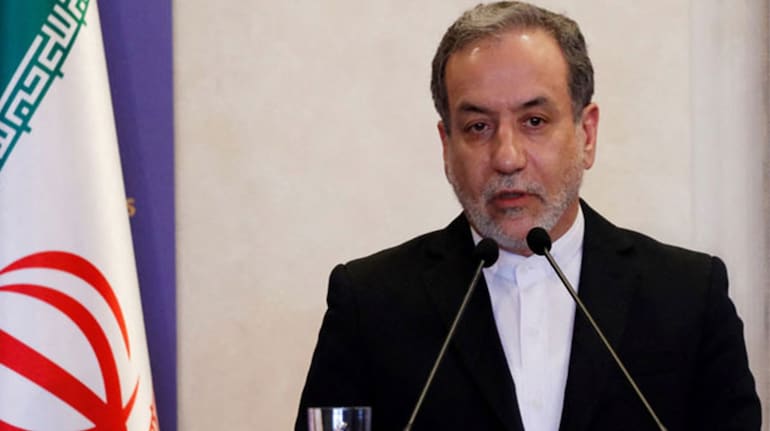
Abbas Araghchi said vessels from most countries can pass through the Strait of Hormuz but ships linked to the United States and Israel are barred.

Iran says US, Israeli ships barred from key oil route

Amid the escalating conflict in West Asia, Iranian Foreign Minister Abbas Araghchi said on Saturday that the Strait of Hormuz remains open to most countries but is closed to vessels linked to the United States and Israel following recent airstrikes on Iran’s key oil hub at Kharg Island.

“As a matter of fact, the Strait of Hormuz is open,” FM Abbas Araghchi said.

“It is only closed to the tankers and ships belong[ing] to our enemies, to those who are attacking us and their allies. Others are free to pass,” he told MS NOW, as cited by New York Post. “And I can say that the Strait is not closed, but it is only closed to American, Israeli, you know, ships and tankers, and not to others.”

The remarks came a day after US forces carried out strikes targeting military facilities on Kharg Island, a crucial hub for Iran’s oil exports. The conflict began on February 28 when the United States and Israel launched coordinated attacks on Iran that killed the country’s Supreme Leader Ali Khamenei.

Tehran later responded with strikes on Gulf nations hosting US military bases, disrupting aviation operations and pushing global energy markets into uncertainty. Araghchi also said some ships were avoiding the route because of security concerns rather than restrictions imposed by Iran.

“Of course, many of them prefer not to because of their security concerns. This has nothing to do with us,” he said.

According to the UK Maritime Trade Operations, at least sixteen vessels operating in and around the Gulf and the Strait of Hormuz have been attacked since the war began.

Meanwhile, Donald Trump has called on global allies to deploy warships to protect shipping through the strait. In a post on Truth Social, the US president urged countries including China, France, Japan, South Korea and the United Kingdom to help secure the key maritime route and ensure uninterrupted global energy supplies.

The Strait of Hormuz, a narrow waterway between Iran and Oman, is one of the world’s most strategic oil transit routes. Roughly 13 million barrels of oil pass through it each day, about 31% of global oil shipments, meaning any disruption could sharply affect global energy markets.

Recent tensions have already led to hundreds of vessels becoming stranded in the region, including several Indian ships, as maritime traffic slows due to security fears and ongoing military activity.

Tuesday, March 10, 2026

Would Nuclear-Armed Nutanyahu Accept Defeat In His Conventional War On Iran?

 [Israeli Zionists badgered every American President since Reagan to bomb Iran and Hezbollah, why would they they would let Trump get away with "Taco-ing" out now?]

Trump deploys 'Doomsday' nuclear command planes to the Middle East as WW3 fears surge

Israel planned this war on Iran for 40 years. Everything else is a smoke screen, by Jonathan Cook - The Unz Review

The World Is on the Edge of Nuclear War. Only Russia and China Can Stop It.


Israel is under unprecedented military pressure, and if conventional war appears unwinnable, the world is approaching a potential nuclear escalation – unless Russia and China draw a clear red line.


In the early morning of March 8, the war unleashed upon Iran by the United States (US) and Israel took a dangerous new turn. The US launched a deadly attack upon Iran’s oil refineries and associated facilities around Tehran and the neighbouring city of Karaj that turned the air over the region into poison. The Iranian government warned its people to wear masks, throw away the food in their refrigerators and change the filters in their drinking water systems immediately. Then, within hours, it gave the Gulf Arab states a warning that it was going to destroy the oil facilities in their countries in four hours, and launched a deadly attack upon Israel’s main oil refinery in Haifa Bay.

The Haifa Bay attack has dealt a severe blow to Israel’s economy and military capability because the refinery meets more than half of its oil consumption requirements. With these attacks, the US-Israel war on Iran has taken a dangerous turn towards total war. Were that to become a nuclear war, it could become the end of the world as we know it today.

I have two reasons for fearing this dire outcome: first, prior to the twelve-day war, Israel had never known the intensity of attack that it suffered in those few days, and is suffering now. It got its first shock when it found that Iran had a new generation of missiles that could penetrate its “Iron Dome” of interceptor missiles. The Israeli government has not officially revealed the full extent of the damage that the country suffered during those twelve days, but estimates concur that 33 or 34 persons were killed and 3,500 were injured.

In the current round of combat, Iran is not only sending a much larger number of missiles, but these are considerably more sophisticated than those it used last June. The Haifa refinery was attacked with a solid fuel rocket, labelled the “Khebar Shekan”, that is 11 metres long and carries a more than half-tonne warhead.

Video shots of the night sky over Tel Aviv taken by Al Jazeera show that Iran’s hypersonic missiles are finding little difficulty in evading Israeli interceptors, and that many not only have an independent manoeuvring capability that makes it very difficult to intercept them, but also “cluster” independently releasable warheads that deny the intercepting missiles a target and pose a serious danger to the civilian population, especially to children, in the daylight hours, if some of these fail to explode immediately.

According to several American estimates, the proportion of Iranian missiles that are penetrating Israel’s interceptor defences had risen from 10% at the beginning of the conflict to between 20 and 35% by the end of the sixth day of war. This rise in the interception ratio confirms the widespread belief that Iran first exhausted its stockpile of older missiles and is only now beginning to use its newer, hypersonic and independently manoeuvrable missiles.

Israel and the US’s efforts to destroy Iran’s missile launch sites have also met with only partial success so far. This is because most of these are buried underground where they are not visible until after the launch has taken place. These single-shot missile launch sites can be recognised on television by the huge brown explosion of dust that precedes the white smoke of the missile’s exhaust.

Smoke billows following an Iranian missile attack in central Israel, Monday, March 9, 2026. Photo: Ohad Zwigenberg/AP

The underground launchers are spread all over the vast terrain of the country, so they are virtually invisible until they self-destruct during launch. Iran is building more and more such launch sites every day. No one knows how many are spread around Iran because we only get to know of them after they have served their purpose. But they are believed to run into thousands.

Thus, far from creating confusion, rebellion and regime change, America’s decapitation strikes of the past fortnight have hardened the Iranian regime’s resolve and the support of the Iranian people for their government. It is also apparent that Iran is following a strategy that it had decided upon months, if not years ago. It first targeted American military bases in the Gulf Emirates that were hosting them, and hit some hotels where it believed American military personnel were housed.

With the help of the Houthis, it is also gradually choking the Strait of Hormuz, through which 20 billion barrels of oil flow every day.

If Iran is able to keep up its present rate of attack on Israeli cities, Benjamin Netanyahu will face a serious dilemma: Israeli citizens have grown used to taking their safety for granted. They had implicit faith in the Iron Dome, and right till last June that faith had been justified. But they began to lose faith in it and on Netanyahu even before it began to crack. In June last year, Israelis found themselves at the receiving end of war for the first time in more than a generation. The very large number of persons injured, the partial destruction of the Mossad headquarters at Tel Aviv and the damage inflicted on Haifa airport severely damaged the fragile cocoon of invulnerability in which they had been living until then.

The Netanyahu government did not release figures for the persons killed or wounded until much later, but the nightly attacks had forced increasing numbers of Israelis to seek shelter in basements and bunkers. And while the government was not releasing any tally of casualties sustained, it was apparent to everyone that people were being killed or severely wounded.

For the first time, therefore, Israelis experienced the fear that their victims in Gaza, the West Bank and East Jerusalem have been living with for the past several decades. This is that they can no longer be sure when they go to bed at night that they will wake up the next morning; or that when their children go to school in the morning they might not return that afternoon. This is the fear that hundreds of thousands of Arab families in Iraq, Libya, Syria and Yemen have been forced to live with during the wars that the US has, with Israel’s misleading inputs, inflicted upon them from 2003 till the present day.

The few days of Iran’s nightly bombing in June therefore did more than just destroy the illusion of invulnerability that Netanyahu has strenuously tried to maintain. It also destroyed much of the public’s confidence that the right-wing coalition that he leads will keep the country safe. A ‘Preferred Party’ survey by Pew in May 2024 had shown that by then 58% of the electorate had turned against Netanyahu’s right-wing coalition and only 38% supported it.

Two months after the twelve-day war, another survey, carried out by the Hebrew newspaper Maariv, projected that opposition parties would win about 62 seats in the 120-member Knesset if elections were held – reversing who held the governing majority. More significantly, only 27% of Israelis retained any confidence in Netanyahu as their prime minister.

Netanyahu’s response to this has been to increase his persecution of the hapless Palestinians in Gaza and the West Bank. In the 120 days between October 10, 2025 and February 10, 2026, Israeli forces broke the ceasefire Trump had brokered between Israel and Hamas 1,620 times, i.e., around 15 times every day. During this period, Israeli forces fired at Palestinian civilians 520 times, raided residential areas beyond the yellow line 79 times, bombed and shelled Gaza 749 times, demolished people’s properties on 232 occasions and took 50 Palestinians from Gaza into custody.

Israel has also continued to block vital humanitarian aid and destroy homes and infrastructure across the entire Gaza Strip. It is difficult not to conclude, therefore, that Netanyahu has continued his crusade to create Eretz Israel “by other means”.

Those ‘means’ have created a war that, Israelis are increasingly realising, cannot be won through conventional warfare, even with all the technological might of the US behind them. So what is the last arrow left in Netanyahu’s quiver? The answer is Israel’s nuclear bomb. No one has a precise idea of how many of these Israel has today, but an estimate publicised by Al Jazeera in 2009 showed that Israel already had 118 nuclear bombs by then, with varying explosive powers.

In case the present generation has forgotten the devastating power of even “small” nuclear bombs, the Uranium bomb that was detonated over Hiroshima on August 6, 1945, had an explosive yield equal to 15,000 tonnes of dynamite. It razed and burnt around 70% of all buildings in the city and caused an estimated 1,40,000 deaths by the end of 1945. The plutonium bomb exploded over Nagasaki three days later, levelled 6.7 square kilometres of the city and killed 74,000 people by the end of 1945. Ground temperatures in both explosions reached 4,000 degrees centigrade and radioactive rain poured down upon both cities.

At any normal time, and in any normal place, the use of such a weapon would be unthinkable, but Israel under Netanyahu could prove to be the exception. For he is a convicted felon who will have to serve prison sentences on three counts of bribery the moment he ceases to be the prime minister of Israel or hold some other office in government. He has found that pursuing the goal of driving every last Palestinian Arab out of “Greater Israel” is his surest way to staying out of prison. And so his government has felt no qualms about killing at least 75,227 Palestinians and injuring 1,54,525 more between October 7, 2023 and February 21, 2026.

Since the truce with Hamas forced upon him by the US and the international community, Netanyahu has found it necessary to find a new enemy – a new mortal threat to Israel, to stay in power. For this he has zeroed in on the supposed threat to Israel and the US posed by Iran. In Donald Trump he has found the stupidly arrogant American president he needs to serve his purpose.

It normally takes between a year and two years to arrange a Head of State’s official visit to the USA. In 2025, every time Trump talked of an agreement with Iran over limiting its uranium enrichment to levels needed for its peaceful use, he found Netanyahu at his doorstep the next day. Netanyahu met Trump six times in 2025-26, and on each occasion Trump pulled back from peace talks with Iran and made further demands instead.

Today, with the war in Iran not going his way, Netanyahu is left with only one other option, and it is to use nuclear weapons against the State. There are unconfirmed reports that Israel has already shifted much of its nuclear weaponry onto submarines, possibly to keep it safe from an accidental explosion. But the only way to make sure that this is, and remains, his sole aim is for Russia and China to make it crystal clear to the Israelis, and the world, that all bets will be off if he uses one of these on Iran.

Prem Shankar Jha is a veteran journalist and commentator

Friday, March 6, 2026

Israeli Writer Says Netanyahu and Trump Following Kabbalah For Timing Of Iran Attack


"Trump and his superior, Bibi Netanyahu, were guided by Kabbalah magic. They agreed to carry out this historic attack on a particularly auspicious date in the Jewish calendar, called Remembrance Shabbat, the last Saturday before the feast of Purim. The facts are overwhelmingly clear: International Jewry decreed the attack day and the US military jumped like obedient dogs to a Jewish whistle."--The Purim War Against Iran

[The following links are to the same article, I guess Yahu felt the 2nd one better.-ed.] 


Netanyahu: Absurd to call Hamas/Amalekites comparison ...

PM's office says it's 'preposterous' to say his invoking ...

Netanyahu equates Iranian regime to ancient biblical foe

’We read in this week’s Torah portion, “Remember what Amalek did to you.” We remember and we act,’ says Israeli PM

Efe Ozkan
 

Netanyahu equates Iranian regime to ancient biblical foe

ISTANBUL

Israeli Prime Minister Benjamin Netanyahu referenced a Torah command equating the Iranian regime to an ancient biblical foe on Sunday.​​​​​​​

During a visit to a site struck by an Iranian missile, Netanyahu stated: "We read in this week's Torah portion, 'Remember what Amalek did to you.’ We remember—and we act."

The Amalekites are identified in the Hebrew Bible as a persistent adversary of the Israelites, linked to a Torah commandment to erase their memory. Specifically, 1 Samuel 15:3 — which mandates the killing of men, women, and infants — has faced international scrutiny for its genocidal language. This biblical rhetoric gained renewed attention in October 2023, when Israeli Prime Minister Benjamin Netanyahu invoked the "Amalek" narrative in reference to Hamas during operations in Gaza.

On Oct.13, 2023, during the swearing-in of Israel's emergency unity government, Netanyahu stated: "Today, against the enemy, with the ancient command ‘Remember what Amalek did to you’ ringing in our ears, today we are uniting forces in order to ensure the eternity of Israel."

As the ground invasion of Gaza began on Oct. 28, 2023, he told IDF soldiers: "You must remember what Amalek has done to you, says our Holy Bible. And we do remember."

The remarks drew international backlash for potentially implying total eradication, were cited in the genocide case opened by South Africa in the International Court of Justice, and were defended by Netanyahu as referring to historical threats, such as the Nazis.

Sunday, March 1, 2026

The Blackmail State: How Israel Turned Child Rape Into Governance


[youtube https://www.youtube.com/watch?v=l6vtwN8sdQ8&w=315&h=576]

Israel’s rape entitlement stems from its foundation

Kompromat: A theory of blackmail as a system of governance

The Blackmail State: How Israel Turned Child Rape Into Governance

Rahim Nathoo
@nathoo_rahim
 
For decades, scattered reports have emerged of pedophiles hiding in Israel, of rape within the military, of Orthodox sects protecting abusers, of Palestinian children subjected to systematic sexual violence. Each case was dismissed as an aberration. But when you connect the evidence, a darker picture emerges: Israel has built a civilization-scale apparatus where child rape is not a failure of governance — it is a doctrine of governance, cohesion, and control. Israel’s Law of Return, intended to offer refuge to Jews worldwide, has been systematically exploited as a haven for child rapists. Jewish-American pedophiles routinely flee to Israel to escape prosecution [1]. Extradition requests often stall for years [5]. Inside Israel, abuse is pervasive. Tens of thousands of pedophiles operate in the country every year [2]. Hundreds of children are sexually assaulted annually [3]. Orthodox communities conceal molestation within yeshivas, rabbinical courts silence survivors, the military suppresses reports of rape among female conscripts [6]. Predators fleeing from the United States and Europe don’t just disappear. They bring with them archives of crimes and kompromat, which become assets for Israeli intelligence. Sanctuary is a pipeline for importing leverage [4]. This feeds directly into Israel’s intelligence doctrine. The Epstein-Maxwell network, with its ties to Israeli intelligence, exemplifies the model: children as currency, sex as leverage, silence as control [9]. Honey-traps involving minors ensnare foreign politicians. Mossad archives compromise U.S. officials and UN staff. Diplomatic immunity shields predators abroad. In the occupied territories, Palestinian children are subjected to detention, rape, and sexual humiliation. These are not random war crimes — they are systematic [7]. Minors are coerced into collaboration under threat of rape [8]. For Israel, occupation doubles as an inexhaustible reservoir of child victims [10]. The machine operates in plain sight because global institutions act as mirrors, not protectors. Media reports surface, then vanish [1][2]. The UN blocks reports of Israeli sexual war crimes [7]. Western governments continue aid while silencing survivors. The evidence converges: Israel has constructed an apparatus of governance where child rape is a functional doctrine. Internally, it maintains cohesion through silence and ritual. Externally, it weaponizes kompromat to control diaspora elites and foreign governments. Militarily, it deploys sexual violence as both weapon and archive. Globally, it is shielded by narrative immunities that turn any exposure into taboo. This is not governance failing to stop child rape. This is governance through child rape. Why does the United States call Israel its “greatest ally”? Because the apparatus ensures silence at the highest levels. Compromised officials cannot resist. Aid continues to flow. Wars are subsidized. And at the center, children’s bodies remain the raw currency of power. Endnotes 1. CBS News, “How Jewish American pedophiles hide from justice in Israel”, October 2019. 2. The Jerusalem Post, “Tens of thousands of pedophiles operate in Israel every year”, July 2020. 3. The Jerusalem Post, “Hundreds of children sexually assaulted in Israel every year”, May 2024. 4. The Jerusalem Post, “Jewish American pedophiles flee justice by coming to Israel – report”, March 2020. 5. Haaretz, “The Extradition of Malka Leifer”, multiple reports 2014–2021 (example coverage: February 2021). 6. Times of Israel, “Ex-IDF general sentenced for sexual harassment”, August 2018. 7. UN Committee on the Rights of the Child, Concluding observations on the second to fourth periodic reports of Israel, CRC/C/ISR/CO/2-4, July 2013. 8. Breaking the Silence, Testimonies from Israeli soldiers on the treatment of Palestinians, various years. 9. Haaretz, “Epstein, Maxwell and Israel’s intelligence ties”, July 2019; The Guardian, “Ghislaine Maxwell’s father and Mossad links”, 2020. 10. Human Rights Watch (HRW) and B’Tselem, Reports on sexual violence and abuse of Palestinian detainees, 2010s–2020s.

Operation Epic Fury Has Been Re-named, "OPERATION EPSTEIN DEFLECTION"

 mikec4845, you are a freakin' genius!

Thanks, Judge Napolitano, for posting this.

OPERATION EPSTEIN DEFLECTION

506

 
[youtube https://www.youtube.com/watch?v=HDVrnJhsSlU&w=832&h=468]

Followers